
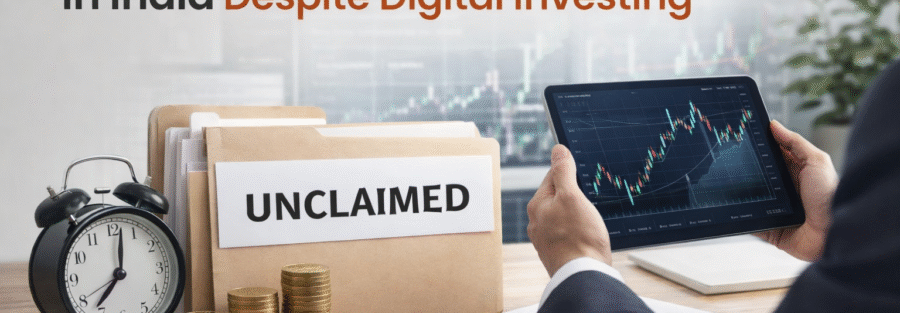
India has witnessed a massive shift toward digital investing over the last decade. Demat accounts, online trading platforms, e-KYC, and paperless transactions were expected to reduce legacy issues like forgotten investments. Surprisingly, the opposite has happened. The value of unclaimed shares transferred to the Investor Education and Protection Fund continues to rise every year.
This raises an important question. If investing has become digital, traceable, and accessible, why are unclaimed shares still increasing?
The answer lies not in technology, but in awareness, documentation gaps, and long-term compliance failures. Understanding this trend is critical for investors, families, and legal heirs who may unknowingly lose access to their wealth. It also explains why recovery of shares from IEPF has become a growing necessity.
The Growing Scale of Unclaimed Shares in India
Unclaimed shares usually arise when dividends are not encashed or credited for seven consecutive years. As per regulatory requirements, companies must then transfer both the shares and the associated dividends to the IEPF Authority.
Despite digital investing, this situation continues to occur across generations. Old physical share certificates, inactive demat accounts, unupdated bank details, and lack of nominee information contribute significantly. As a result, recovery of unclaimed shares has emerged as a critical financial and compliance issue rather than a rare exception.
Digital Investing Solved Access, Not Ownership Awareness
Digital platforms have simplified buying and selling shares, but they have not solved ownership awareness. Many investors focus on transactions, not long-term record maintenance.
Email changes, phone number updates, and bank account closures often happen without corresponding updates in demat or company records. Over time, communication breaks down. Dividends bounce back, shares become inactive, and eventually, they move to IEPF.
This disconnect explains why recovery of shares from IEPF is increasingly required even for digitally savvy investors.
Legacy Physical Shares Still Dominate IEPF Transfers
A major contributor to rising unclaimed shares is legacy physical shareholding. Millions of investors still hold shares purchased decades ago. In many families, these certificates are misplaced, forgotten, or undisclosed to legal heirs.
Without timely dematerialisation of shares, companies face difficulty in maintaining updated records. When dividends remain unpaid, shares are eventually transferred to IEPF.
The lack of awareness around how to convert physical shares to demat remains a major gap, directly impacting the volume of IEPF transfers.
Inadequate Nomination and Succession Planning
Another overlooked reason is poor nomination discipline. Many investors open demat accounts but skip nomination or fail to update it after life events.
In the absence of a valid nominee, legal heirs must go through a detailed IEPF claim process supported by succession certificates, indemnities, and affidavits. Delays or inaction during this period often result in shares remaining unclaimed for years.
This is why recovery of shares from IEPF is often initiated by the next generation rather than the original investor.
Compliance Gaps Between Investors and Companies
Digital investing operates smoothly at the platform level, but company-level compliance still relies on accurate shareholder records. Any mismatch between PAN, name format, address, or bank details can interrupt dividend payouts.
When investors fail to align their KYC details across all platforms, dividends remain unpaid. Over time, this triggers IEPF transfer requirements. The issue is procedural, not technological.
Understanding these compliance gaps is essential for anyone planning recovery of unclaimed shares.
Why the IEPF Claim Process Feels Complex
Many investors discover the existence of unclaimed shares only after they have been transferred to IEPF. At this stage, the recovery route becomes structured and compliance-driven.
The IEPF claim process involves filing Form IEPF-5, submitting documents to the original company, and responding to verification queries. While the process is logical, it requires precision and patience.
This complexity explains the rising demand for professional IEPF share recovery services, especially in legal heir and multi-folio cases.
Dematerialisation Is Still Incomplete
Although demat accounts are now mandatory for most transactions, dematerialisation of old holdings remains incomplete. Investors often assume that inactivity poses no risk.
In reality, inactive or forgotten holdings are more vulnerable. Converting physical shares to demat and updating KYC details are preventive steps that significantly reduce the risk of IEPF transfer.
The absence of timely dematerialisation continues to fuel the growth of unclaimed shares in India.
The Role of Awareness and Timely Action
Rising unclaimed shares are not a failure of digital systems. They are a result of delayed action and low awareness. Investors rarely review legacy holdings or track dividend credits unless a problem arises.
Regular audits of shareholdings, demat statements, and nominee details can prevent future claims. Where transfers have already occurred, structured recovery of shares from IEPF becomes the only solution.
Moving From Prevention to Recovery
Once shares are transferred to IEPF, prevention gives way to recovery. A well-prepared claim backed by accurate documents, aligned KYC, and clear entitlement improves success rates.
Engaging professional IEPF share recovery services can help investors and families navigate the process with clarity, especially when multiple folios or legal heirs are involved.
Final Thoughts
The rise of unclaimed shares in a digital investing era may seem contradictory, but it reflects human behavior more than system failure. Technology enables access, but responsibility ensures continuity.
Whether through proactive dematerialization or structured recovery of unclaimed shares, timely action is essential. Awareness today can prevent years of uncertainty tomorrow.
Unclaimed shares are not lost forever. They require the right documentation and guidance.
👉 Request a Free IEPF Recovery Consultation
Frequently Asked Questions (FAQs)
1. Why are unclaimed shares increasing in India even after digital investing?
Despite digitisation, many investors still hold old physical share certificates, outdated KYC details, or inactive demat accounts. Corporate actions like mergers, name changes, and unpaid dividends often go unnoticed. When dividends remain unclaimed for seven consecutive years, shares are transferred to IEPF. This gap between digital platforms and investor awareness is the main reason unclaimed shares keep rising.
2. What is the role of IEPF in unclaimed shares?
The Investor Education and Protection Fund (IEPF) is a government authority that safeguards unclaimed dividends and shares. If dividends are not claimed for seven years, companies must transfer the shares to IEPF. Investors can legally recover them by following the IEPF claim process. The fund ensures investor protection but requires proper documentation for recovery.
3. How can investors start the recovery of shares from IEPF?
The recovery of shares from IEPF begins with filing IEPF Form 5 online. After submission, physical documents must be sent to the company’s Nodal Officer for verification. The process includes identity proof, share ownership proof, and bank details. Once approved, shares are credited back to the investor’s demat account.
4. Is dematerialisation mandatory for IEPF share recovery?
Yes, dematerialisation of shares is mandatory before recovery. IEPF only transfers shares in demat form, even if the original holding was physical. Investors must convert physical shares to demat by opening a demat account and completing the dematerialisation process. Without this step, IEPF claims cannot be processed.
5. Should investors take professional IEPF share recovery services?
IEPF claims often involve legal heir verification, old records, signature mismatches, or missing documents. Professional IEPF share recovery services help reduce errors and delays by handling documentation and coordination with companies. This is especially useful for inherited shares or long-pending claims. Expert assistance improves approval chances and saves significant time.